
- There are reports of some positive effect on mood.
- The evidence score is 71, and reliability is considered high.
- This information is relevant to those who experience low mood or feelings of anxiety.
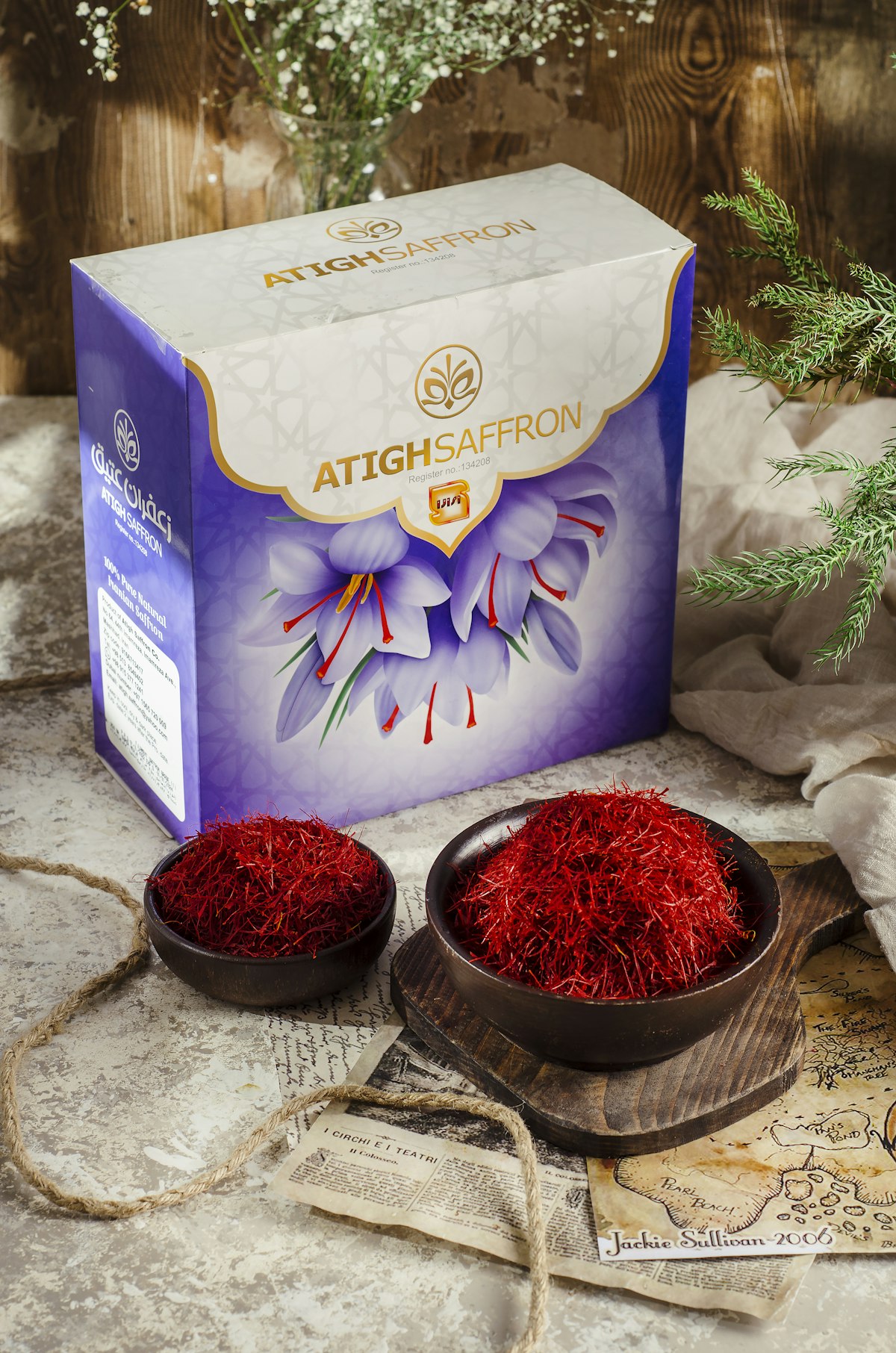
Saffron is a spice obtained from a plant of the genus Crocus.
It is generally taken in a variety of contexts, such as for coloring or flavoring food.
There are reports that saffron has a positive effect on mood.
The results of these studies suggest changes in feelings of calm and in the response to stress. Specifically, several studies have found a tendency for it to ease feelings of anxiety and low mood, and to make social relationships go more smoothly. There is also mention of a possible relationship with sleep quality.
These reports are based on several studies. For example, in a study involving 56 participants, a decrease in mood scores and improvement in relationships were seen among healthy adults experiencing anxiety or stress. This is the result of an examination of effects that bring about changes in mood.
Many of these studies have used the method of a randomized controlled trial (a reliable research method in which participants are randomly divided into groups to compare effects). In other words, these can be described as studies designed to avoid bias due to chance.
Changes related to mood and stress have been confirmed across 3 studies.
The study subjects span a wide range, from healthy adults to people who report experiencing mild to moderate depressive symptoms. In total, research has been conducted at a scale of 364 people.
The content reported differs depending on the state of the participants. In one study, 180 people with symptoms were studied over 42 days. In another study, 128 healthy adults who self-reported low mood were examined over a period of 4 weeks.
Many of these studies used a comparison involving a placebo (a fake substance that looks the same as the drug but contains no active ingredient). In other words, a control was prepared to confirm the effect of saffron itself, and the results were compared against it.
The evidence score is a high 71, putting reliability at a high level.
It has also been shown that results may differ depending on the amount taken. In one specific study, a decrease in negative mood was seen at a daily intake of 28mg, but no effect was confirmed at an amount of 22mg.
To confirm this difference, a comparison was set up between the different amounts of 28mg and 22mg. The duration was 28 days, and specific indicators were used for measurement.
This result was found to have statistical significance (meaning that, as a result of calculation, the difference can be said to be meaningful rather than due to chance). In other words, this shows that the way the response occurs may also change depending on the amount taken.
| Study | Design | Number of participants | Duration | Main result |
|---|---|---|---|---|
| Nutrients (2025, PMID:40077679) | Randomized controlled trial (RCT) | 180 people | 42 days | A positive effect was reported |
| Frontiers in Nutrition (2020, PMID:33598475) | Randomized controlled trial (RCT) | 56 people | 56 days | A positive effect was reported |
| Complementary Therapies in Medicine (2017, PMID:28735826) | Randomized controlled trial (RCT) | 128 people | 28 days | A positive effect was reported |
A total of 364 people were the subjects of this research. This breaks down into 128 healthy adults who self-reported low mood, 56 healthy adults experiencing low mood or anxiety/stress, and 180 participants with mild to moderate depressive symptoms.
Because this research includes not only people in a healthy state but also people experiencing a change in mood, it can serve as a benchmark when comparing this against your own situation.
This research is based on a limited number of studies — 3 in total.
The design of all the studies conducted is a randomized controlled trial (RCT).
It should be noted that the state of subjects and the duration of the study differ between studies.
How is saffron reported to relate to mood?
There is research on healthy adults experiencing low mood or feelings of anxiety and stress. In that research, a positive effect on mood has been reported.
How long have studies on saffron been conducted for?
The duration differs between studies. Some have been conducted over periods such as 28 days, 42 days, or 56 days.
How many studies have been conducted on saffron?
3 studies have been reported showing that saffron has a positive effect on mood. The reliability of this research is considered high.
Research shows that saffron may have a positive effect related to mood and stress. The evidence score is 71, and this can be described as falling into the high-reliability category of reports. However, this summary is based on 3 studies, and there are also aspects that require further investigation.
To reflect on your own state of mind, why not start with the self-check?